
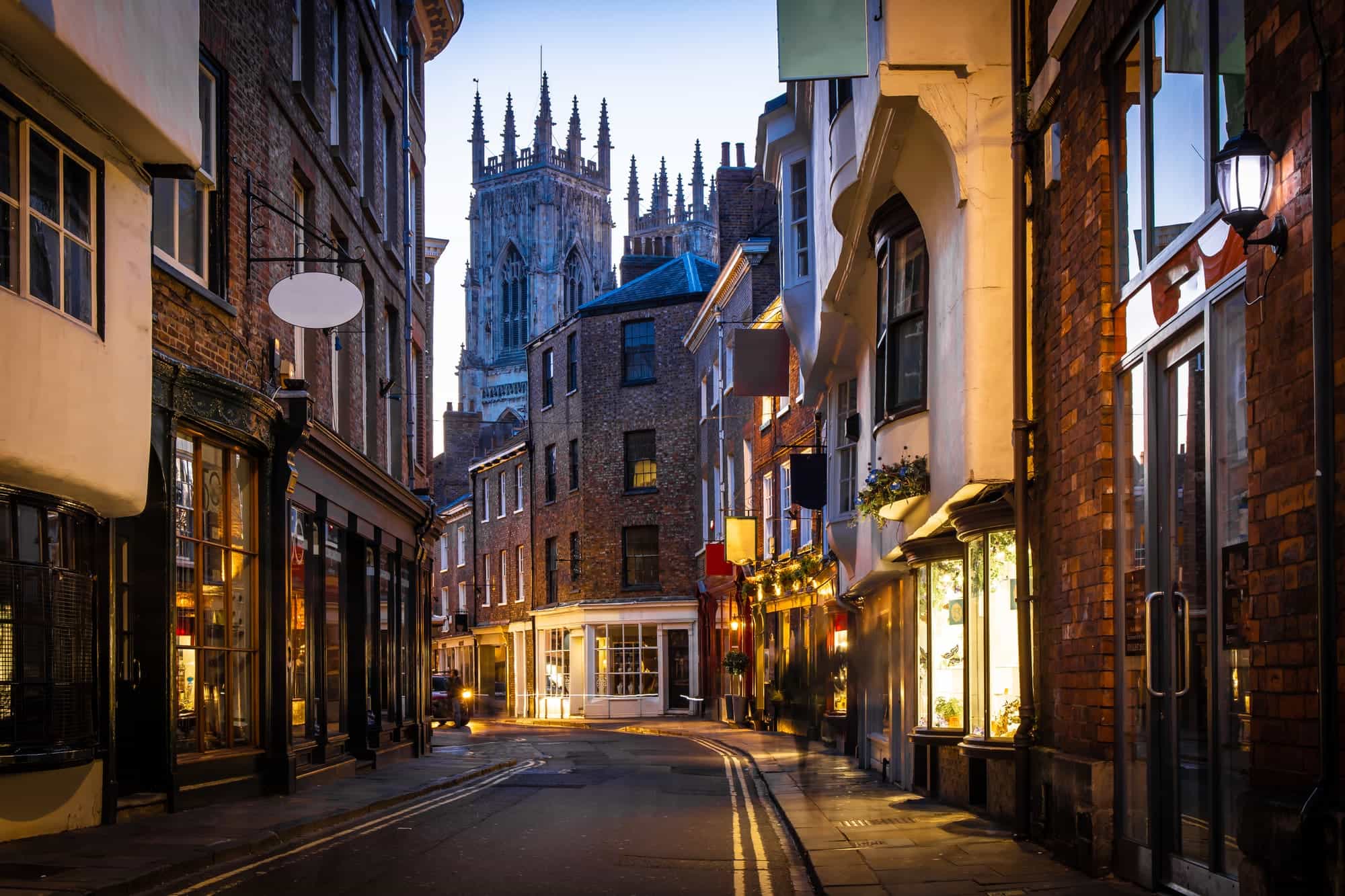
Legionella risk assessment · York
Legionella Risk Assessment & Testing in York
Legionella risk assessments, water testing and sampling for businesses, landlords and property managers across York and the surrounding area.
- City and Guilds WH004 qualified assessors
- HSE ACoP L8 and HSG 274 compliant
- Bespoke reports, never generic
- Operating throughout the UK


Local to York
Covering York and the surrounding area
We carry out legionella risk assessments and water testing right across the City of York, from the city centre out to the villages around it, and in the towns nearby. We're based at Fusion at Magna in Rotherham, about 40 miles from York as the crow flies.
York has a great many hotels, guest houses, holiday lets and listed buildings, as well as offices, schools, care homes and student accommodation. Older buildings often have long pipe runs, little-used outlets and stored hot water, which are exactly what a legionella risk assessment looks at.
Postcodes: YO1, YO10, YO19, YO23, YO24, YO26, YO30, YO31 and YO32
Areas we cover in York
- York city centre
- Acomb
- Clifton
- Dringhouses
- Fishergate
- Fulford
- Heslington
- Haxby
- Wigginton
- Heworth
- Holgate
- Huntington
- New Earswick
- Osbaldwick
- Rawcliffe
- Bishopthorpe
- Copmanthorpe
- Poppleton
And nearby
- Selby
- Tadcaster
- Wetherby
- Easingwold
- Malton
- Pocklington
What a legionella risk assessment in York involves
A legionella risk assessment is a survey of your building's water system and the way it is run. One of our City & Guilds WH004 qualified assessors visits your York property and works through the system from the incoming mains to every outlet: tanks, calorifiers and water heaters, pipework, showers, taps and anything that is rarely used. They look at the materials, the design and the condition of the system, the controls already in place, how it is managed, and who could be exposed, taking account of how vulnerable those people are.
The findings are then written up into a report with a schematic drawing of your water system. Each assessment is written for the building in front of us, never generated from a template, and our quality control team checks it before it is sent to you as a PDF or a printed copy.
York's older buildings and legionella
York has a great many listed and older buildings, along with hotels, guest houses, holiday lets and student accommodation. These often have exactly the features a risk assessment pays close attention to: long or altered pipe runs, cold water tanks in lofts, dead legs left behind by past alterations, and rooms or whole properties that stand empty for weeks at a time. Water that sits still and lukewarm is where legionella bacteria multiply, so that is where the assessment and the control plan concentrate.
Your legal duties as a landlord or employer in York
If you are an employer, a landlord or anyone in control of premises in York, health and safety law requires you to identify and assess the risk from legionella and to put controls in place. HSE's Approved Code of Practice L8 and its technical guidance HSG274 explain how. In practice that means a suitable risk assessment, a written scheme for controlling the risk, someone appointed to manage it, and records of the checks carried out.
Keep the assessment under review, and look at it again straight away if anything changes, such as alterations to the water system, a change in how the building is used, or check results showing the controls are not working.
Legionella testing in York
Testing, or water sampling, means taking samples from the system for a laboratory to analyse. Not every building needs routine sampling. Your risk assessment will say whether yours does, for example where there is a cooling tower or a spa pool, or where checks show temperatures are not being kept under control. Where sampling is needed, we take the samples and explain what the results mean.
In most hot and cold water systems, temperature is the main defence. HSE's guidance is that hot water should be stored at 60°C or above and reach outlets at 50°C or above within a minute (55°C in healthcare premises), while cold water should stay below 20°C. Legionella bacteria grow best between 20°C and 45°C.
Who is most at risk
Anyone can catch Legionnaires' disease, a potentially fatal form of pneumonia caught by breathing in tiny droplets of contaminated water. Some people are more vulnerable: those over 45, smokers and heavy drinkers, people with chronic respiratory or kidney disease, diabetes, or lung or heart disease, and anyone whose immune system is weakened. Care homes and healthcare premises therefore need particular care.
Arrange a legionella risk assessment in York
Tell us a little about your building using the quote form on this page, or give us a call, and we will reply with a quote and our availability. After the assessment we stay on hand to explain the report and help you put its actions in place.
How it works
Your legionella risk assessment in York
A clear, simple process, with a bespoke report at the end of it.
- 1
Tell us about your building
Send the form or call us. We reply with a quote and our availability.
- 2
Full site survey
An assessor surveys your water systems, from the supply into the building to the drain.
- 3
Checked, bespoke report
Your report and schematic drawings are checked by our QC management team.
- 4
Stay compliant
Delivered as a PDF or printed copy, with monitoring, sampling and remedial works if you need them.
Questions
Legionella in York: common questions
Do I need a legionella risk assessment for a property in York?
If you're an employer, or you're in control of a building in York with a water system used by staff, tenants or the public, the law expects you to identify and assess the risk from legionella and keep it under control. That includes landlords of rented homes. HSE's Approved Code of Practice L8 sets out how, and a risk assessment is the starting point.
What's the difference between a legionella risk assessment and legionella testing?
A risk assessment is a survey of the whole water system and how it's managed: tanks, pipework, water temperatures, little-used outlets and the people who could be exposed. You get a written report, a schematic drawing and a plan of what to do. Testing, or water sampling, means taking samples for a laboratory to analyse. Not every building needs routine sampling; your risk assessment will say whether yours does, and sampling then checks that the controls are working.
How often does a legionella risk assessment need reviewing?
HSE's Approved Code of Practice L8 says to review it regularly, and straight away whenever there's reason to think it's no longer valid: for example after changes to the water system, to how the building is used or who uses it, or if checks show the controls aren't working.
Do you cover all of York?
Yes. We work across York (YO1, YO10, YO19, YO23, YO24, YO26, YO30, YO31 and YO32) and the rest of Yorkshire from our base at Fusion at Magna in Rotherham, and we work nationwide too.
How do I get a quote?
Use the quote form on this page or call us on 0114 551 5599. Tell us a little about your building and we'll reply with a quote and our availability.
Local experts
Areas we cover
As well as York, we carry out legionella risk assessments across these areas.
Yorkshire
11Derbyshire
3Further afield
5We work nationwide, so don't worry if your city, town or village isn't listed.
Ask for a quoteGet a free quote in York
Tell us about your building and we'll reply with a quote and our availability.